
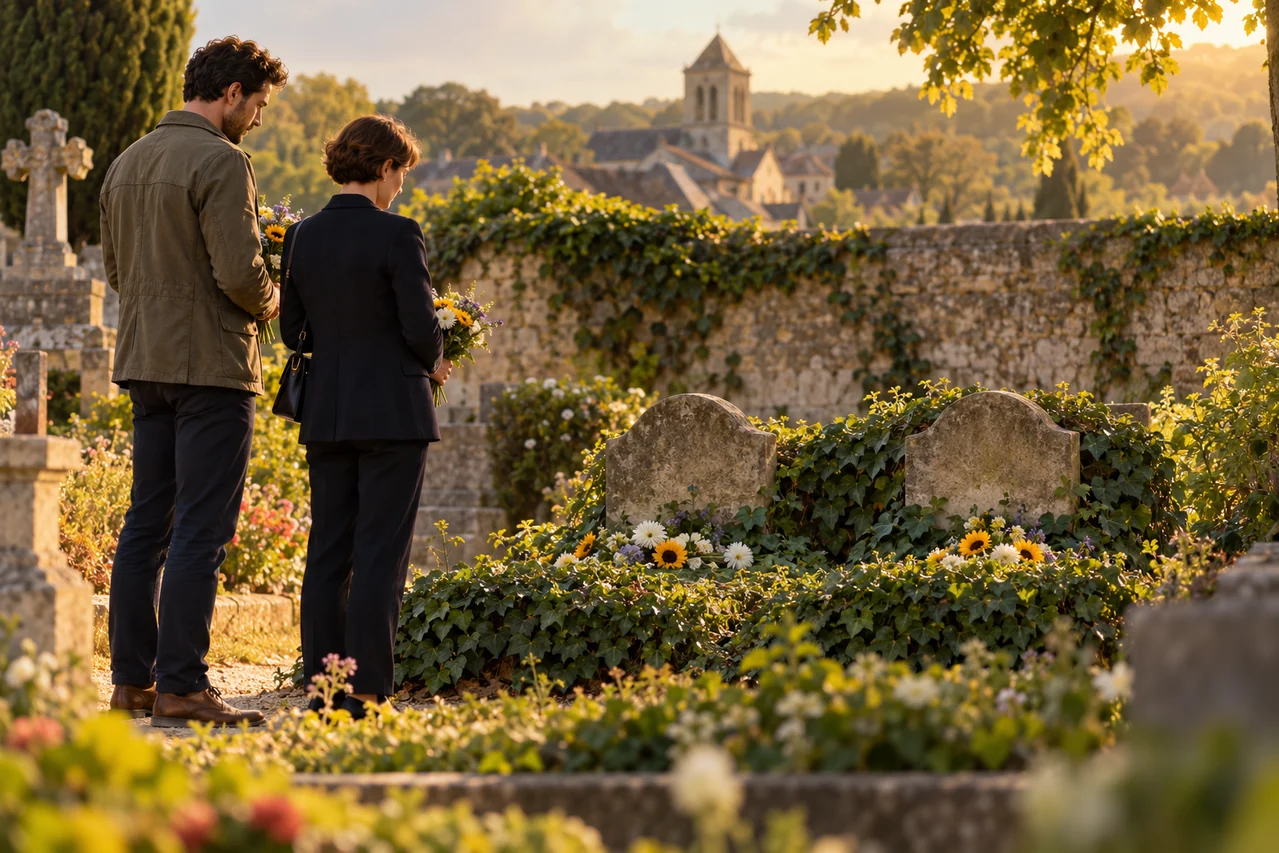
Vincent's burial followed his death in Auvers
Vincent died at the Auberge Ravoux in July 1890 and was buried in the village. This local sequence gives the cemetery a direct connection with the final period of his life. It does not mean that the burial was organized as a future destination for international art visitors. That later significance developed with his reputation. The distinction helps travelers understand a place of remembrance in its original human circumstances before considering the worldwide attention it now receives.
Theo did not originally lie beside him
Theo died months after Vincent and was not initially buried alongside his brother in Auvers. His remains were transferred to Auvers in 1914. This detail matters because the current arrangement can make visitors imagine a single event of joint burial. The neighboring graves instead reflect a subsequent act of family remembrance. A careful account allows the physical place to prompt historical questions, rather than assuming that its present appearance records every stage of how the memorial came to be.
Johanna's role continues the family story
Johanna van Gogh-Bonger was central to preserving and promoting the painter's legacy and to the family history behind the brothers' eventual resting place together. Her place in the account counters the impression that Vincent's fame and memorial setting emerged without sustained work by others. Vincent and Theo's relationship introduces that wider family story. The cemetery becomes more meaningful when visitors recognize the decisions and care through which memory was carried into a later generation.
The neighboring graves change the focus
The simplicity of the setting contrasts with the artist's immense public reputation. Seeing two graves rather than one draws attention toward the relationship that supported the work. Theo is not merely an additional name beside a celebrity; the proximity makes his importance visible. For travelers, that can shift the encounter from solitary genius toward family, correspondence and support. The place offers a concise physical expression of a relationship whose full history extends far beyond the final weeks at Auvers.
Artistic pilgrimage is a form of reception
Visitors come because they know the paintings, even though the graves contain no canvas to admire. That movement reveals something about the relationship between audiences and artists: the work encourages a desire to acknowledge the person who made it. The cemetery should not be made to answer every biographical question or to certify a romantic image of the painter. It shows instead how reputation creates new associations with a place and how an audience participates in continuing remembrance.
Respect belongs to the practical experience
A cemetery is a burial place, not merely another attraction. Quiet behavior, consideration for other visitors and care around graves should guide the visit. An advisor can prepare guests for that setting without prescribing an emotional response. The account can be thoughtful and accessible while retaining its seriousness. Photography, conversation and the movement of a group should remain proportionate to the environment, and no theatrical interpretation should turn remembrance into a staged spectacle of the artist's suffering.
Choose its place in the day deliberately
The cemetery can come after the village and landscape, when guests have first encountered Vincent's active work at Auvers. It need not be the compulsory emotional climax of every excursion. Some guests may prefer a restrained pause followed by further discussion of the paintings. Planning the wider Auvers visit offers a framework for balancing home, subjects, relationships and memory. The itinerary should make room for the site while avoiding an entire day narrated backward from death.
Return attention to what the brothers helped preserve
The neighboring graves can lead back to the letters, paintings and family labor that carried the work forward. This is a fuller conclusion than simply contemplating the tragedy. An Auvers Encounter can help connect the memorial setting with that continuing artistic life, leaving guests with a more informed relationship to images they may later see in museums. The place honors people, while the cultural journey returns to the creativity and support that made their story matter beyond the cemetery.
FOR YOUR GUEST ITINERARIES
For guests visiting Van Gogh's Auvers, our team can help place the cemetery within a respectful cultural journey that connects family memory with the artist's work.
Discuss your itinerary