
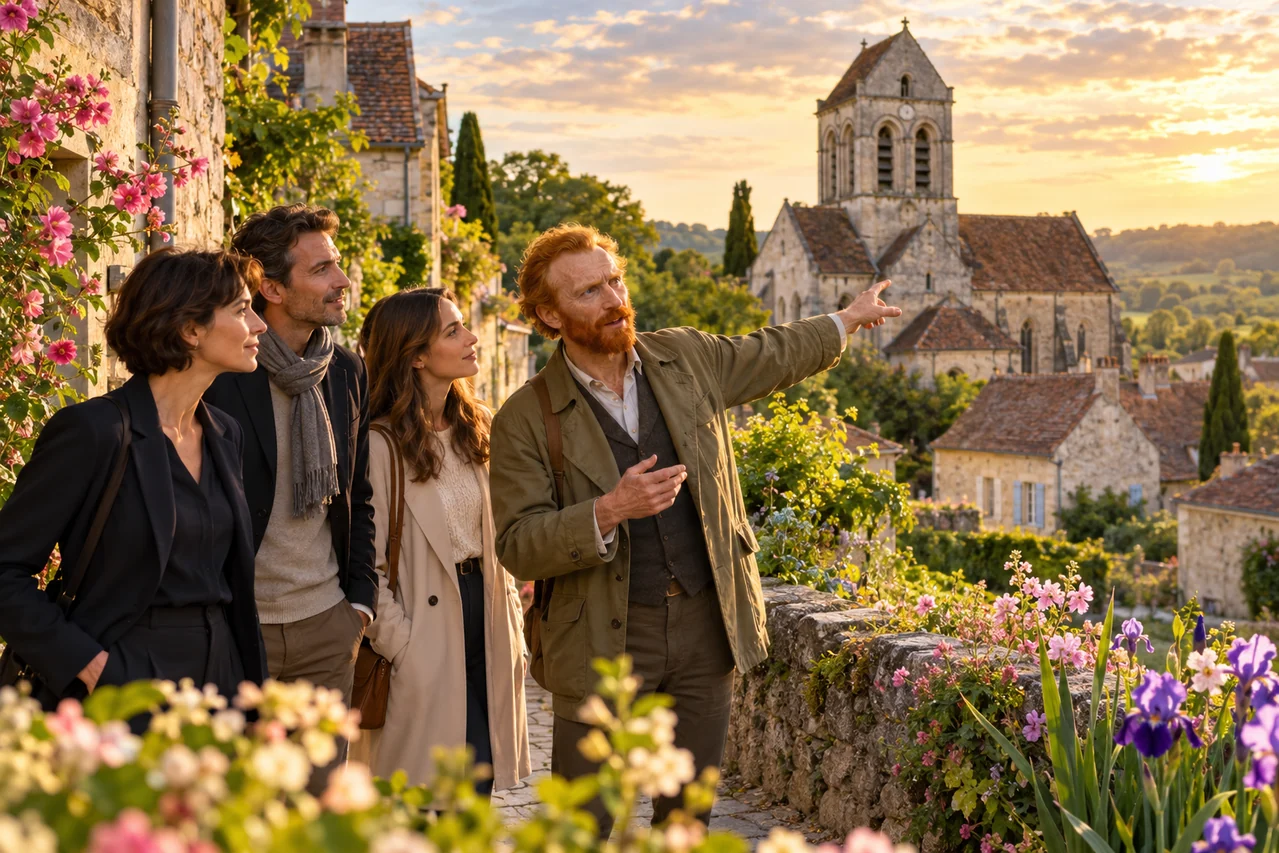
Start with the village and the reason for arriving
Beginning with Vincent's choice of Auvers restores a sense of possibility to the place. The rural setting, connection with artists, proximity to Theo and presence of Gachet explain why it could serve as a next chapter in his life. The visitor then encounters a working environment rather than a destination defined only by death. This introduction also gives the day's geography a purpose: the places that follow reveal different aspects of what Vincent sought and found.
Give the Auberge Ravoux a domestic role
The inn introduces the modest scale of his daily circumstances. It should connect with the routine of leaving to work and returning, not function only as a memorial to the final events. The cultural significance can be understood even before any separate practical arrangements are made for visiting particular spaces. Advisors should verify conditions independently and avoid implying that the Encounter provides guaranteed interior access. The location contributes a home chapter to the wider artistic story.
Use the church for comparison and observation
The church supplies a clear link between a recognizable painting and its subject. Guests can notice changes of line, color and perspective instead of only seeking the exact viewpoint of a reproduced image. This makes the stop useful for families and experienced art travelers alike. A younger guest may begin with what looks different; a collector may consider composition and the painter's choices. The same place can support different levels of understanding without requiring different facts.
Allow the landscape to remain a landscape
Walking toward the fields gives guests time to look at the environment that became painting. It should not be narrated exclusively through foreboding. The temptation to interpret every view through Vincent's death narrows the work and the place. A guide can discuss subject, format and visual transformation, with appropriate caution about claims concerning a last painting. Space to observe is part of the cultural value, not unused time between more important biographical addresses.
Let the Encounter connect the separate chapters
Van Gogh’s Last Days in Auvers-sur-Oise can provide an embodied thread through work, people and place. The theatrical artist invites questions rather than claiming access to every private thought of the historical man. For an advisor, its position should depend on the day's purpose: introduction, central encounter or deepening after guests have seen the subjects. It is particularly effective when surrounding visits answer complementary questions and do not repeat the same general biography in several forms.
Gachet and Daubigny widen the frame
Places associated with Gachet and the village's earlier artistic history help prevent the excursion from treating Auvers as the territory of one isolated genius. They reveal networks, collecting and an existing relationship between rural place and painting. Gachet's overlapping roles provides one continuation for guests interested in people behind the work. Any added visit should earn its place through relevance, with practical access checked separately rather than assumed from its proximity to the route.
Build pauses and remembrance into the rhythm
A meal or unstructured interval can let the day settle before a respectful cemetery visit. The graves of Vincent and Theo may introduce family memory after the visitor has seen something of creative life. The cemetery should not become a forced emotional climax. Advisors can adjust the sequence to mobility and attention while retaining the different functions of each chapter. Depth comes from the relationship between them, not from completing every possible stop before returning to Paris.
Choose another destination only when it adds meaning
Giverny offers a different artistic subject: Monet's long transformation of a garden contrasts with Vincent's intense short stay in an existing village. Choosing between Giverny and Auvers helps clarify that distinction. Combining the two requires thoughtful pacing rather than assuming that famous names automatically make a better day. A Paris introduction through Montmartre can also supply useful context, but the itinerary should remain focused enough that guests have time to experience each place rather than merely recognize it.
FOR YOUR GUEST ITINERARIES
Tell Elyrea whether your guests are drawn to painting, biography or family discovery; our team can help place the Van Gogh Encounter within their Auvers day.
Discuss your itinerary