
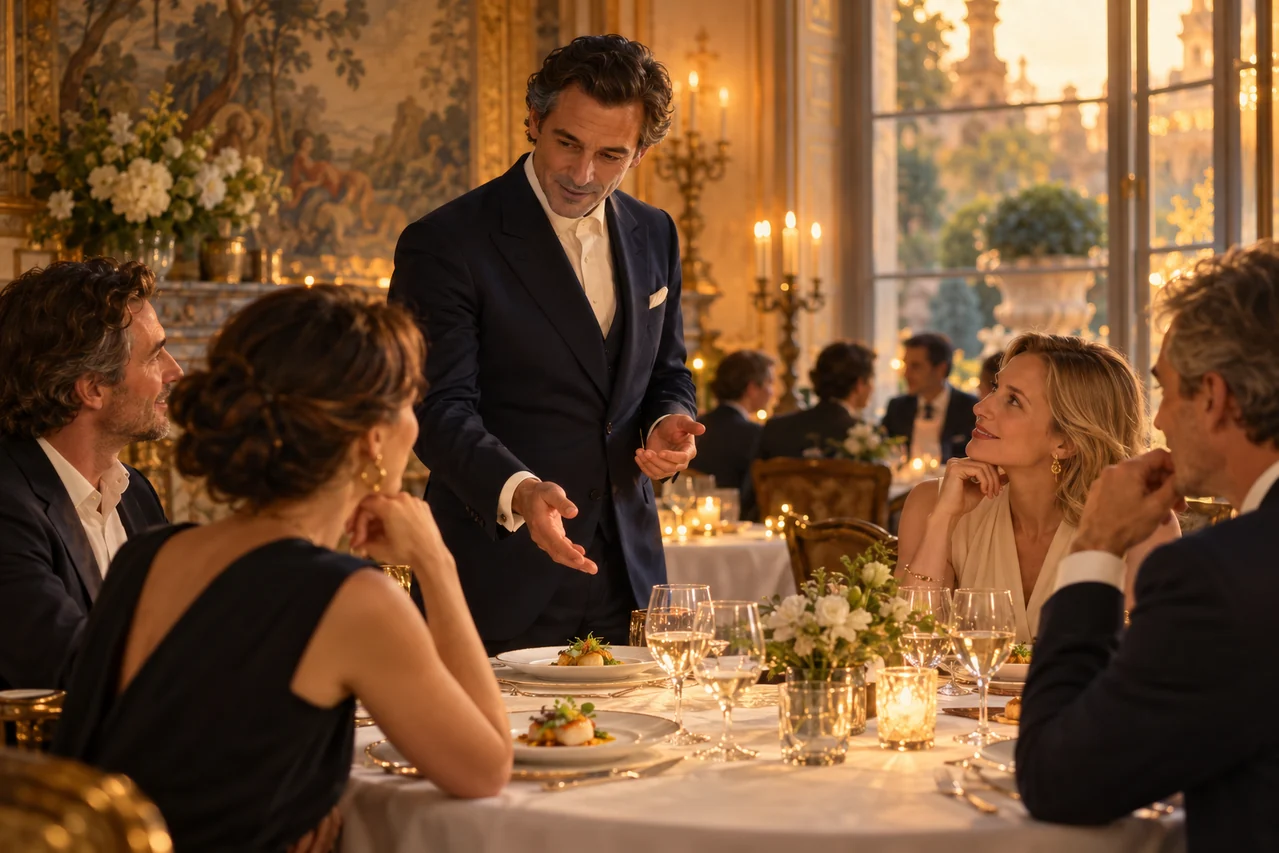
A host's organizer rather than a modern chef
François Vatel worked in great aristocratic households, first in the environment of Nicolas Fouquet and later for the prince of Condé. His responsibilities extended beyond preparing food. The historical role of maître d'hôtel involved organizing service and coordinating the resources that allowed a powerful household to receive appropriately. Calling him a chef without explanation projects a later professional model onto a different world. Who Vatel was provides the useful starting point: a person whose work made magnificence possible.
An aristocratic meal communicated status
A prestigious dinner displayed wealth, connections and the ability to mobilize people and goods. Taste mattered, but it was not the only message. The host's table showed how the household understood rank and how successfully it could enact that understanding. For travelers, this turns gastronomy into a historical subject rather than a decorative addition to a visit. They can ask why abundance was shown, who could attend and what the arrangement communicated to contemporaries who knew how to read its social signals.
Receiving the king raised the stakes
Hosting Louis XIV meant accommodating a sovereign and the hierarchy around him, not simply preparing a favorite dish for one distinguished guest. The reputation of the receiving household was publicly exposed. Vatel's work belonged to the practical machinery behind that representation: supplies, personnel and timing had to support the effect the host wanted to produce. Such pressure helps explain why the organizer's viewpoint is culturally valuable. It reveals how political ambition depended on material details that guests might barely notice when things went well.
Service reveals what the plate cannot
Who served, when dishes appeared and how the table was arranged all carried meaning. The history of the meal therefore includes movement, objects and labor as well as ingredients. Organizing a grand dinner opens the less visible side of the occasion. Travelers accustomed to smooth hospitality can recognize the challenge of coordination, while keeping the social conditions of seventeenth-century service distinct from modern employment. The comparison is useful precisely when it identifies both similarities in practical problems and major differences in context.
Food belongs to a specific historical setting
Aristocratic tables could include meats, fish, vegetables, fruits and sweet preparations, with choices shaped by season, supply and religious calendars. There was no single menu served everywhere under Louis XIV. An experience should therefore avoid claiming that any contemporary meal is automatically an exact reconstruction. Historical interpretation can draw on food culture while being clear about its own status. This keeps the dinner credible and allows it to explore how access to products expressed privilege without inventing a universal royal recipe book.
The senses give history material presence
Taste, smell, table objects and the rhythm of service offer a concrete vocabulary for subjects often encountered only through portraits or buildings. The meal can carry questions about social hierarchy, trade and the organization of a household. It does not need to make every dish symbolize a historical event. The strength lies in the connection between an activity guests understand and a world they are learning to understand. A dinner becomes part of cultural discovery rather than merely the pause between two visits.
Vatel lets the backstage become visible
A theatrical interpretation of the character can ask how many guests are expected, what happens if a delivery fails or how an ambitious plan reaches the table. Those questions invite participation through familiar practical problems. The dramaturgy should remain distinct from independent historical evidence, and the character's words should not be presented as recovered testimony. Elyrea's Encounter uses narrative and interaction to illuminate responsibilities, giving a recognizable historical figure a perspective that differs from the view of kings and princes.
Connect the dinner to a wider journey
Vatel can complement an itinerary about Louis XIV, aristocratic society or French hospitality, while Marie-Antoinette and Veuve Clicquot open different later periods. The connections should preserve chronology rather than merge all celebrated French lifestyles into one timeless scene. For advisors, the dinner offers a focused cultural purpose for food-minded guests and those interested in the work behind luxury. The desired memory includes what guests understood about receiving, serving and power, alongside the pleasure and conversation of the meal itself.
FOR YOUR GUEST ITINERARIES
Designing Paris for guests passionate about gastronomy and history? Ask Elyrea how A Dinner with Vatel can become a meaningful chapter in their itinerary.
Discuss your itinerary