
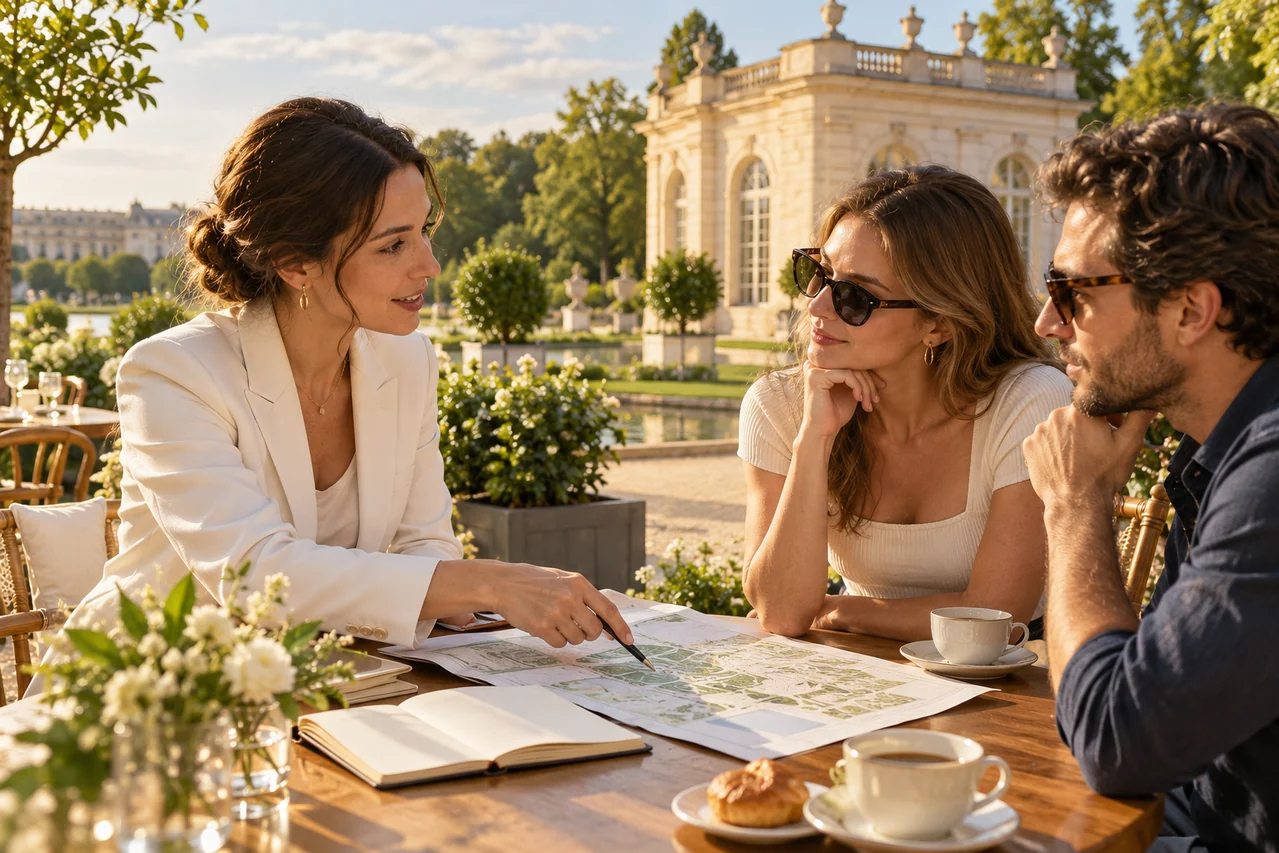
Establish the guest's starting point
A first-time visitor, a returning traveler and a Marie-Antoinette enthusiast need different balances of orientation and depth. Ask what the guest already knows, which spaces they have visited and what they most want to understand. These answers should come before the route is filled with appointments. Someone new to Versailles may want the major ceremonial spaces, while a specialist may prefer Trianon and focused conversation. The day becomes coherent when each choice serves a known purpose rather than reproducing a standard list of essential stops.
Begin with a concise account of the court
A few clear ideas can make the estate legible: access to the sovereign mattered, etiquette organized hierarchy, and magnificent surroundings represented power. This introduction does not need to become a lengthy overview of every reign. It gives the guest a framework for the Marie-Antoinette questions that follow. Preparing for a Versailles visit helps establish how much context is useful. The traveler can then connect a room or social rule with a human consequence, rather than face an overwhelming collection of unfamiliar facts.
Give the encounter a pivot in the sequence
Marie Antoinette, Rebel Queen can prepare the guest's questions before selected estate visits or deepen them after observation. The better order depends on previous knowledge and practical arrangements. Beforehand, the embodied character can make the themes of reputation and privacy easier to recognize; afterward, the traveler can bring specific impressions into the conversation. Keep the encounter distinct from the arrangements for palace admission or other visits. Its role is to connect the person's perspective with the broader historical and physical context, not to promise every element of the day's program.
Select the palace spaces by their contribution
For a first visit, the principal ceremonial spaces remain significant. But a queen-centered day should not become an attempt to cover the entire estate before reaching its real focus. Consider what each detour adds to the guest's question and what attention it consumes. A focused selection can explain the court world clearly while preserving energy for Trianon. An advisor's judgment is visible in what is omitted as well as what is arranged. The goal is a developing understanding, not evidence that every possible room was included.
Give the Petit Trianon substantial time
The Petit Trianon helps explain Marie-Antoinette's wish to control aspects of her social environment. Its relationship with the main palace reveals differences in scale and ceremony, while its selected circle shows why intimacy could become politically contentious. Why the queen valued the Petit Trianon should therefore form an important chapter rather than a quick final addition. Time to look allows the visitor to compare the two environments directly and recognize that personal retreat remained an expression of exceptional royal privilege.
Continue toward the Hameau with a new question
The Hameau can extend the discussion from privacy toward landscape taste and reputation. Its rustic appearance should be interpreted within eighteenth-century culture rather than reduced to the familiar farming story. The Hameau beyond caricature provides a distinct question: how can a real place become such a persuasive symbol in later memory? This chapter offers movement and a change of atmosphere, useful for families as well as specialists. It should add to the Trianon discussion rather than repeat the same conclusion about the queen's desire for escape.
Make rest and different levels of engagement part of the plan
A proper lunch pause gives travelers time to discuss what they have seen and recover attention for the next chapter. Families may need a simpler central question and more variation between listening and movement; informed enthusiasts may value discussion of letters, portraits or the limits of particular claims. Returning visitors can begin with a narrower focus instead of repeating the standard opening. These adjustments are substantive parts of the itinerary. Premium pacing means respecting the guest's ability to enjoy and absorb the day, not filling every interval.
End with understanding rather than a forced verdict
The sequence can move from magnificence to ceremonial constraint, then toward more personal settings and the problem of reputation. The traveler may finish with a changed or more complicated view of Marie-Antoinette. It is not necessary to resolve every question or insist on admiration. Avoid adding a dense Paris continuation merely because it is technically imaginable; a separate chapter may serve a longer stay better. The successful day gives each experience a purpose and leaves the guest able to think about the queen more precisely than before.
FOR YOUR GUEST ITINERARIES
Building a Marie-Antoinette day for your guests at Versailles? Our team can discuss how Marie Antoinette, Rebel Queen fits their interests and the wider estate itinerary.
Discuss your itinerary