
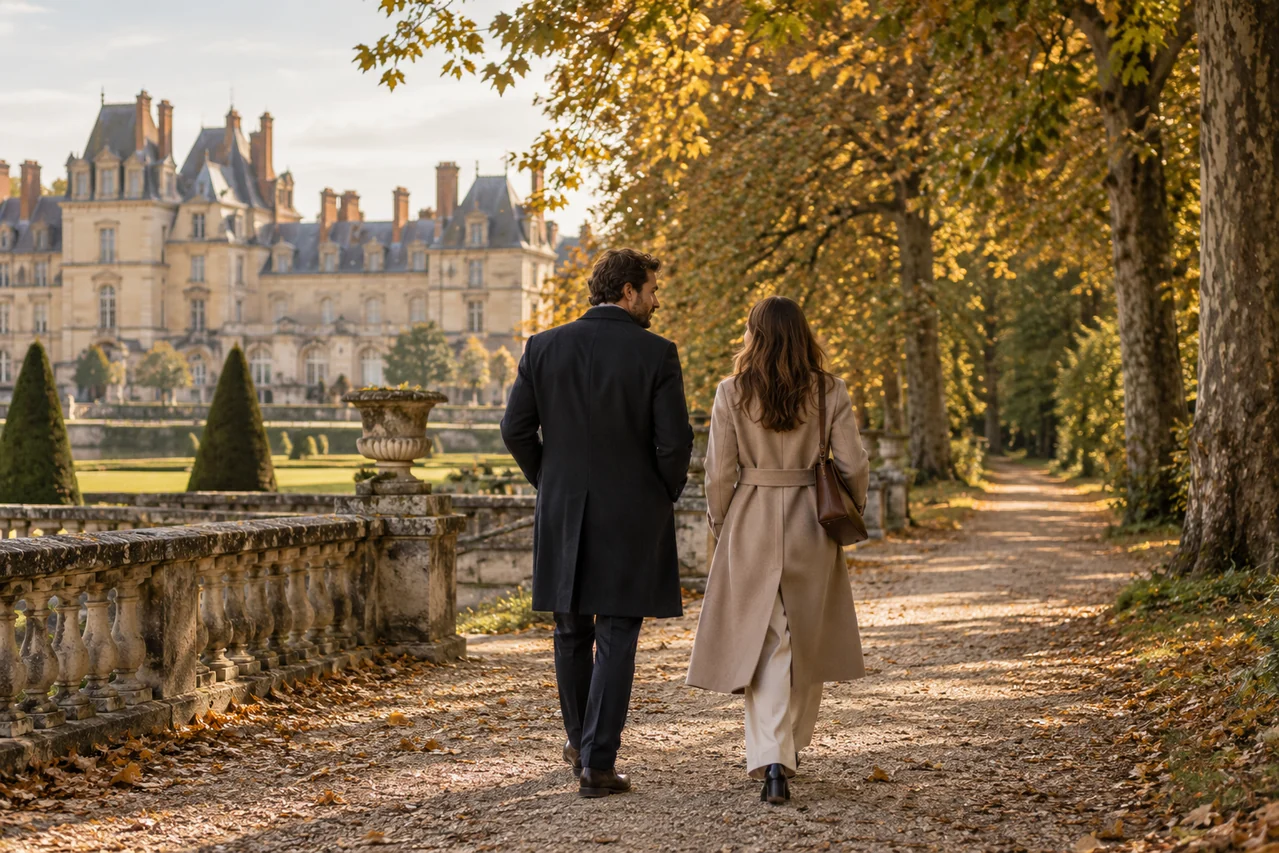
Ask what the first visit left unexplored
A returning traveler rarely needs a longer checklist of places. The more useful question is what the previous visit did not explain. A château tour may have established the royal chronology while leaving the surrounding forest almost invisible. Another visit might have included a walk without connecting it to court life or painting. Starting with that gap gives the advisor a reason for the return. The program becomes a new chapter in the guest's understanding, rather than a repetition disguised by a different lunch.
Give the forest an independent role
The forest deserves time as a cultural landscape in its own right. Sandstone, paths and changing woodland views offer a form of attention different from interiors and collections. Its history includes hunting, working communities and later artistic appreciation. Travelers who already know the palace can start outside and let these layers shape the day. The value is not that the forest is hidden or exclusively available. It is that a familiar destination reveals a part of itself the guest has not yet learned to read.
Follow the legendary huntsman into royal imagination
The Grand Veneur belongs to Fontainebleau folklore and provides a narrative connection with the world of royal hunting. An Elyrea Encounter can turn that tradition into an active conversation with the landscape. Its legendary status should remain clear: this is not a recovered biography or proof of supernatural events. For a returning visitor, the shift of viewpoint matters. The destination is approached through a presence, a question and an interaction, rather than another sequence of rooms already recognized from the first trip.
Let Barbizon develop a different way of looking
Nearby Barbizon connects the territory with nineteenth-century painting and rural life. After time in the forest, travelers can consider why artists selected particular trees, light or working scenes as subjects. This sequence makes artistic history tangible because the guest has already experienced the environment being discussed. Barbizon and Fontainebleau's painters adds a focused artistic direction. It is especially effective for visitors whose first château tour concentrated on monarchs and architecture rather than on the surrounding landscape.
Choose one theme rather than every available stop
A royal history enthusiast may want the relationship between court, hunt and territory. An art lover may prefer forest observation and Barbizon. A family might follow a mystery while testing the distinction between legend and evidence. These are different returns to the same destination, not inferior versions of one standard excursion. The itinerary should follow the guest's motivation. Including the palace, forest, village and every viewpoint in one day can leave less understanding than a smaller number of carefully connected experiences.
Change the rhythm as well as the content
A repeat visit can offer more space for observation than a first visit organized around essential sights. Walking, a comfortable meal and a pause to look at the landscape help make that difference felt. Terrain, footwear, physical ability and weather still require planning; the woodland setting should never be sold as effortless for every traveler. Nor should its appeal depend on a promise of solitude. Personalization comes from the quality of the narrative and the suitability of the pace, not from pretending others will disappear.
Place Fontainebleau within a wider French journey
For guests who know Versailles, Fontainebleau gives another relationship between monarchy and landscape. For those interested in painting, it can precede a Monet or Van Gogh excursion while retaining its own historical focus. The connection works when each destination answers a distinct question. Fontainebleau introduces the forest as royal environment and artistic subject; other places illuminate particular painters and periods. This avoids making a multi-day cultural itinerary feel like a succession of interchangeable famous names or picturesque villages.
End with a changed understanding of the destination
A successful return lets the traveler explain what Fontainebleau means differently this time. They may recall the legendary hunt, the sound of the forest or a painter's decision about a tree, with those memories leading back to historical context. Planning a cultural Fontainebleau day begins with precisely that desired outcome. The Grand Veneur Encounter can provide a narrative center, while the surrounding program allows guests to absorb and discuss it. The return is justified by a new interpretation, not simply by additional sightseeing.
FOR YOUR GUEST ITINERARIES
Helping guests rediscover Fontainebleau? Elyrea can advise on integrating the Grand Veneur Encounter into a return visit shaped around their interests and preferred pace.
Discuss your itinerary