
Identify what the first visit did not explain
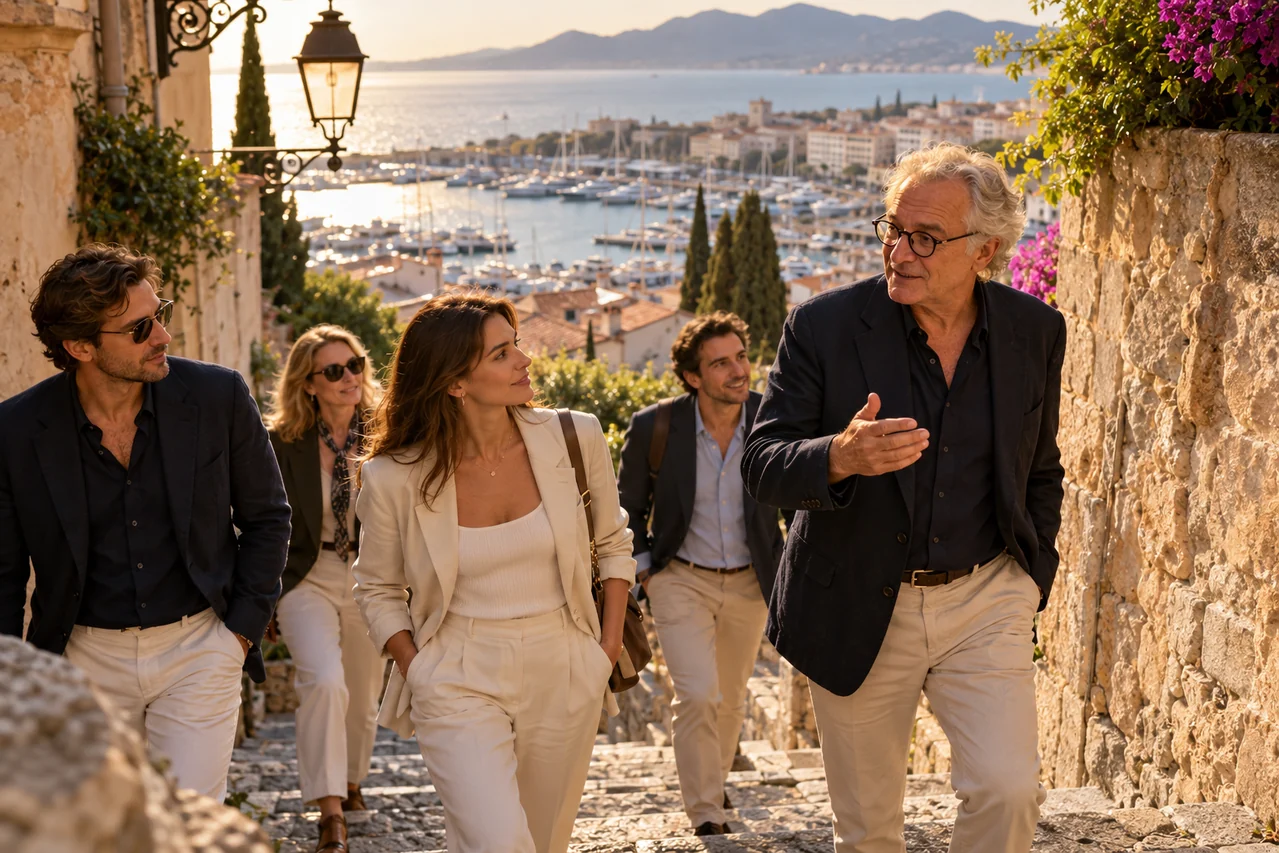
A returning guest may already have seen the Palais, waterfront and grand hotels. More stops do not necessarily answer the need for discovery. Ask instead which relationships remain unfamiliar: how the Festival works, how the city became a resort or how images acquire influence. This changes the itinerary's purpose from collecting places to interpreting them. It also helps avoid repeating an introductory route with a few decorative additions. The traveler returns because the destination has more to say, not because a new photograph has been promised at a slightly different angle.
Look at the Croisette as a social stage
The promenade belongs to an older resort culture of looking and being seen. The Festival amplified that function through international celebrity and media, rather than inventing it from nothing. How the Croisette became a cinema stage can therefore transform a familiar walk. Guests observe how hospitality, movement and public presence work together. This perspective remains useful outside the event itself, when permanent surroundings are easier to distinguish from temporary activity and when the absence of crowds can leave more room for explanation and attention.
Examine how a public image is produced
The red carpet brings together a person, clothing, photography, press activity and an organized occasion. Fame is not simply a quality that appears naturally when someone walks up the stairs. It is represented through a system of choices and distribution. Returning travelers interested in media or communication may find this particularly revealing. The account should not become a claim to know every private intention behind an appearance. Its value lies in understanding visible mechanisms: framing, repetition and the relationship between a local moment and the much wider audience that encounters its image.
Discover the industry's less photogenic work
Professional cinema at Cannes extends beyond public ceremonies. Films require circulation, distribution and business relationships, and the Festival environment brings participants together around those tasks. This is a useful second layer for a guest whose earlier visit concentrated on glamour. The advisor can discuss the relationship between artistic recognition and a film's wider life without promising access to negotiations or working spaces. The city then becomes a place where cinema operates as an industry as well as an image, offering substance beneath the scene the traveler already recognizes.
Reconnect the waterfront with the city's earlier history
Cannes's nineteenth-century development as an international resort helped provide the hospitality and reputation later used by the Festival. The older city can also supply a visual and historical contrast with the cinematic waterfront. This prevents the entire destination from being treated as one contemporary luxury display. A return visit can ask how successive identities accumulate rather than replace one another completely. The Festival is a powerful layer of Cannes's history, but understanding what preceded it makes the familiar image more interesting and more geographically grounded.
Follow fashion from creation to representation
Guests who have explored couture in Paris can consider Cannes as a place where clothing becomes a globally circulated public image. This connection gives a thematic French itinerary a genuine progression rather than simply adding boutiques in another city. Chanel and Dior's contrasting approaches may prepare a conversation about creation and style; Cannes develops how those cultural forms are represented in public. The link works when tailored to the guest, with time for looking and discussion rather than assuming that shopping alone provides the required cultural chapter.
Let humor reveal a familiar destination's codes
Elyrea's Quentin Tarantini is a fictional character in Cinéma, Strass & Scandales, distinct from Quentin Tarantino. His narrative perspective can play with Cannes's theatrical self-presentation while remaining separate from historical fact and the biography of any real director. For returning travelers, humor can create a productive change of tone without dismissing cinema or luxury as empty. The character is valuable when he helps guests recognize how the city stages itself, not when a string of unsupported backstage claims is offered as privileged knowledge.
Design the return as a coherent change of perspective
A considered program may connect a Croisette reading, the Encounter, a meal and an older-city contrast, with space to linger where guests are interested. It should not be more crowded simply because they have visited before. Planning a cinema-themed day in Cannes begins with a clear cultural intention and practical conditions. The successful return leaves familiar places newly intelligible. Guests may still enjoy the hotels, sea and public spectacle, while now recognizing the history and systems through which that enjoyment became part of Cannes's identity.
FOR YOUR GUEST ITINERARIES
Have guests returning to Cannes or the Riviera? Elyrea can help you integrate the fictional Quentin Tarantini Encounter into a program that offers a new reading of places they already know.
Discuss your itinerary