
Clarify the two meanings of Gothic
In architecture, Gothic refers to a tradition associated with medieval buildings and their structural and decorative forms. In literature, the word can describe an atmosphere of unease, secrecy, ruins or the supernatural. One does not automatically produce the other. A cathedral is not inherently a horror setting, and a Gothic tale need not occur in a medieval building. Understanding this distinction makes the combination around Notre-Dame more interesting, because the visitor can observe how different associations meet.
Notre-Dame provides a physical starting point
The cathedral's architecture gives the literary imagination a material setting. Height, sculpture and the relationship between building and surrounding streets can encourage a different pace of looking. Yet the encounter should not replace architectural understanding with vague claims about darkness. The structure belongs to a long religious and artistic history. A serious literary experience respects that history while examining why later writers and readers found such a setting so powerful for stories of uncertainty and intense feeling.
Later restoration helped shape the inherited image
Some of the cathedral's most recognizable fantastical figures belong to nineteenth-century intervention, not to an unchanged medieval ensemble. This is particularly relevant to a visitor seeking Gothic atmosphere. What feels ancient may also reflect a later generation's imaginative engagement with the Middle Ages. The building becomes evidence of reception as well as construction. That layered understanding connects naturally with literature, which repeatedly reshapes the past through the concerns of the period in which a story is told.
Poe contributes a mood and a method
Poe's tales can unsettle the reader, but his interest in reasoning and perception is equally important. An embodied Poe therefore need not be reduced to a voice describing frightening things in a Gothic neighborhood. He can invite guests to question appearances and distinguish evidence from suggestion. His role in detective fiction develops that intellectual side. The city setting becomes a place to examine uncertainty, with the writer acting as a theatrical literary host rather than a biographical guide.
Small streets create changes of scale
Moving between open spaces and narrower surroundings changes what a visitor notices: sound, enclosure, surfaces and the distance between buildings. These observations can support atmosphere without requiring an invented supernatural explanation. The route should allow the guest to see before asking them to imagine. A detail becomes more meaningful when it is connected with the actual urban environment, rather than supplied as a stock symbol of haunted Paris that could be repeated in any old city.
Power and punishment are separate historical subjects
The Conciergerie and other institutional settings can bring political and judicial history into the wider itinerary. Their connection to danger should be explained with context and care. Gothic mood is not an adequate account of real imprisonment or death. An advisor can keep the roles distinct: one component establishes the historical institution, another explores literary interpretation. This protects the seriousness of the history while allowing a cultural journey to consider how sites accumulate emotional and imaginative associations.
Let daylight, sound and water contribute
A Gothic literary perspective can work in daylight, when details of architecture and urban change are easier to observe. The Seine, the movement of the city and moments of relative quiet can support attention without a forced theatrical darkness. For photographers, the subject may be scale and texture as much as ominous mood. For returning visitors, a renewed approach to the Île de la Cité can create a useful framework for looking beyond the most familiar views.
Build a literary experience with a clear premise
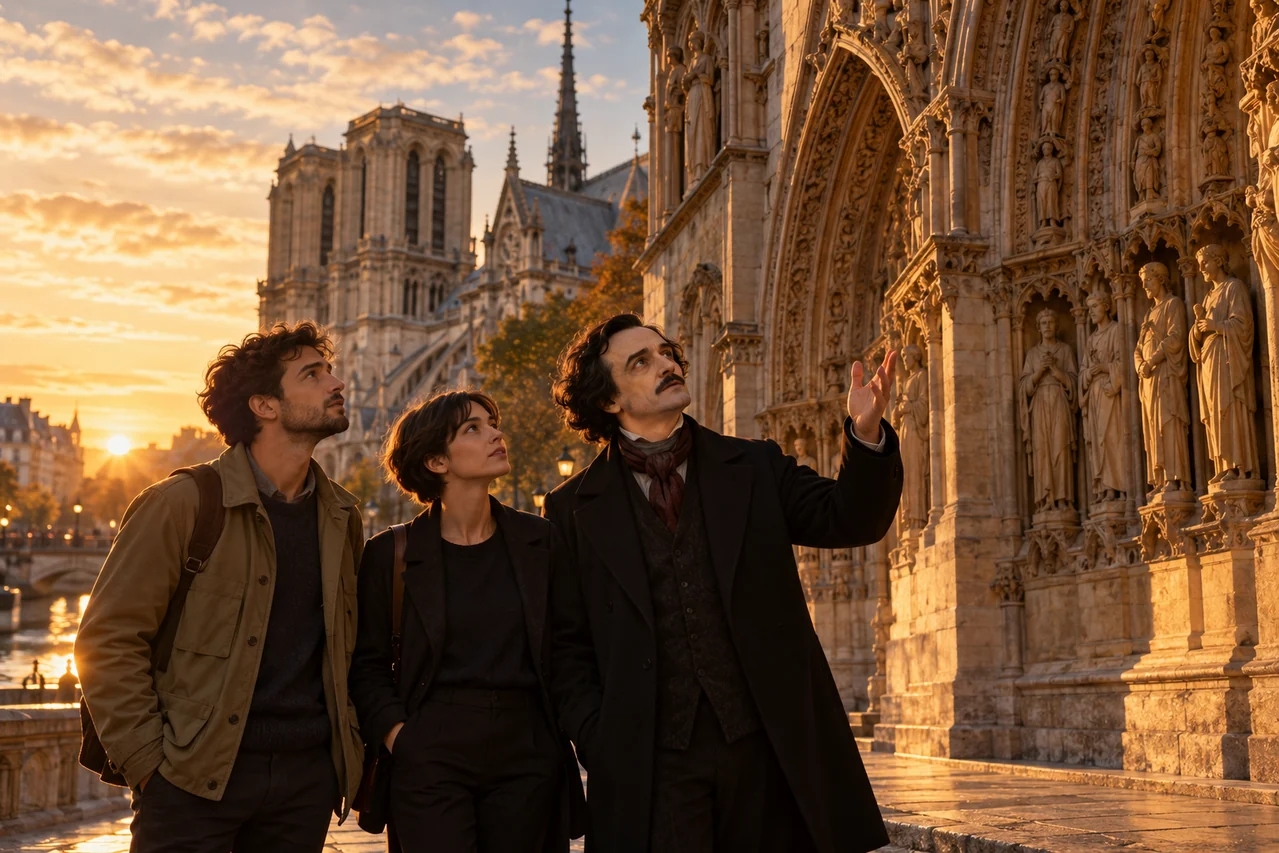
The Dark Legends of Paris brings Poe's imagined world into conversation with the surroundings of Notre-Dame. It is neither a reconstruction of his Paris life nor a claim that the whole district belongs to one Gothic story. Advisors can introduce that premise clearly and select complementary visits according to the guest's interests. The cultural reward is an ability to notice how architecture, history and literature influence one another, while retaining the differences that give each its depth.
FOR YOUR GUEST ITINERARIES
For guests interested in Gothic literature, architecture or photography, Elyrea can help pair a Poe Encounter with the Paris surroundings that best support their interests.
Discuss your itinerary