
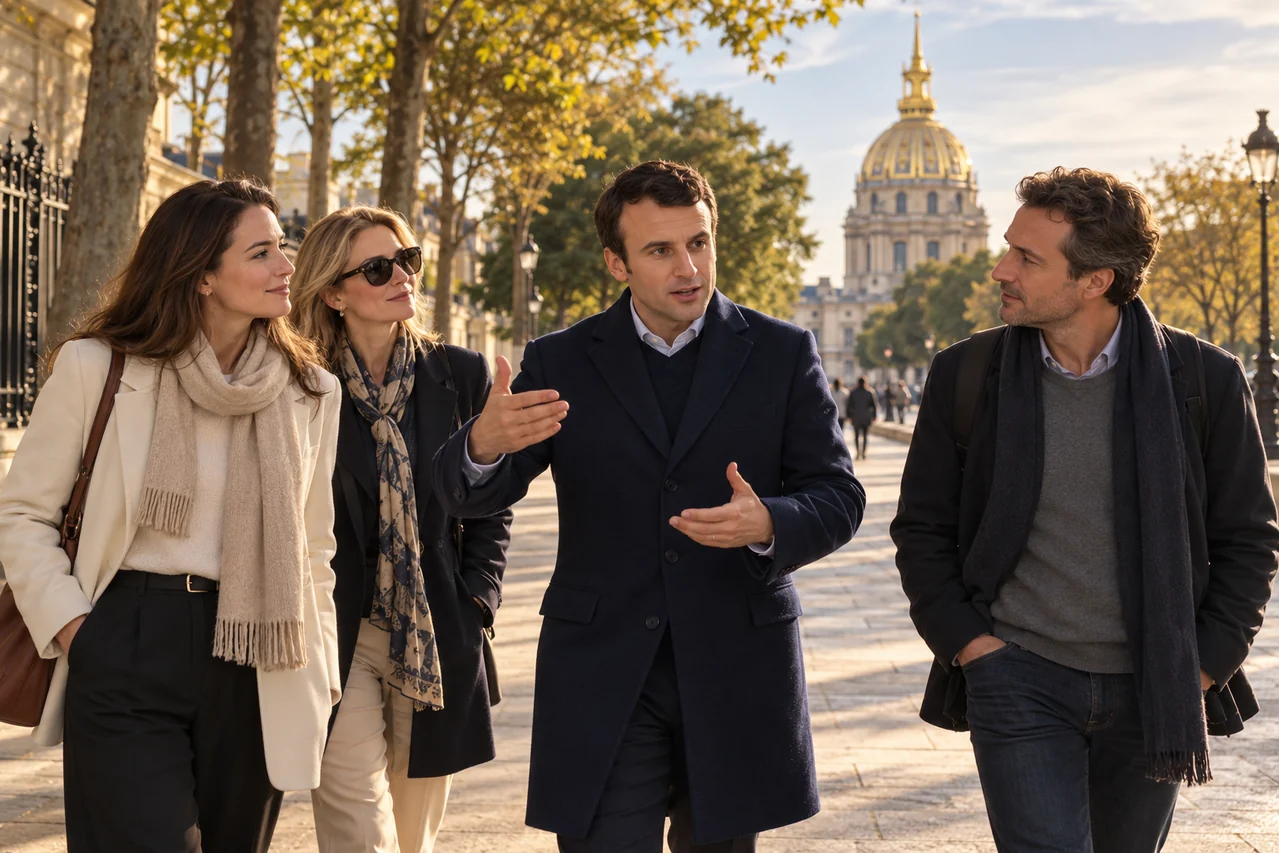
The Invalides brings history and remembrance together
Napoleon's tomb makes the Invalides a natural starting point, while the Musée de l'Armée supplies a broader military setting for the Revolutionary and imperial periods. The site contains enough material to dominate a day if visitors try to see everything. A thoughtful program selects according to interest: campaigns, objects, memory or the ruler's posthumous place in France. The tomb and the collections offer different kinds of evidence, and neither needs to be rushed simply to complete a checklist.
The Arc outlived its original commission
Commissioned in 1806 and completed in 1836, the Arc de Triomphe was not finished during Napoleon's lifetime. It shows how a military monument can accumulate meanings under later governments. The Unknown Soldier and remembrance flame add a national commemorative role beyond the imperial story. The Arc's real connection to Napoleon helps visitors keep those layers distinct. A responsible itinerary respects the site's present function while using its origins to consider how power sought permanence in the urban landscape.
The Vendôme Column makes victory visible
The column is closely connected to the commemoration of Austerlitz and imperial imagery. Its subsequent history, including the upheavals of the Commune, also reveals how political symbols remain contested after the regimes that created them disappear. Travelers can therefore read it as evidence of both celebration and dispute. The question is not only what Napoleon wanted to represent, but how later generations responded. This makes the square useful for guests who prefer a concentrated conversation about memory to another long museum visit.
The Madeleine reveals a change of purpose
Napoleon envisaged a temple honoring the Grande Armée within the Madeleine's evolving project history. The building ultimately assumed a religious role rather than simply preserving that intention. Its changing purpose is a useful reminder that a monument's current function may not explain every stage of its conception. An advisor can connect this site to a theme of inherited projects and altered regimes. It should be introduced with that specific question, rather than added because any association with Napoleon automatically makes a stop essential.
The Tuileries can be discussed through absence
Napoleon used the Tuileries Palace as an imperial residence, but the palace no longer stands after the fire of 1871 and its later demolition. Absence itself can become part of reading Paris. Travelers accustomed to observing surviving buildings may find it especially revealing to imagine a political setting that has disappeared. The account should make clear what remains and what is being reconstructed through explanation. It is a historical interpretation of the landscape, not a claim that an existing palace can be entered today.
The Louvre opens a difficult cultural question
The palace and museum connect imperial ambition to the movement of artworks during conquest, followed by partial restitution after the Empire's fall. This subject is especially relevant for art-minded guests. Collections are not detached from political history: how works reached a museum can matter alongside their artistic qualities. The Louvre should be included with a carefully chosen focus rather than squeezed into an already full day. The connection is strongest when guests can examine the relationship between cultural prestige, war and appropriation.
Avoid confusing Napoleon I with later Paris
The capital's history includes another Napoleon, the ruler of the Second Empire. Haussmann's transformations should not be casually attributed to Napoleon I. Maintaining that distinction helps international travelers organize different nineteenth-century periods that are often blurred together. It also makes the itinerary easier to understand. A selected Napoleonic thread can coexist with other histories in the same street without claiming ownership of everything visible. Paris is layered, and the first emperor's traces form one part of that larger landscape.
Select a question before selecting every stop
An itinerary about strategy will differ from one about state power or the making of a legend. Planning a themed day begins with that choice and with the guest's existing knowledge. Elyrea's Napoleon Encounter can serve as a conversational pivot between material evidence and decisions, giving monuments a human dimension. The advisor then chooses the sites that best support the question, allowing time for transfers, rest and discussion instead of presenting the capital as an exhaustive hunt for every imperial association.
FOR YOUR GUEST ITINERARIES
Your guests want to explore Napoleon’s Paris? Contact Elyrea about connecting selected monuments with a strategy Encounter suited to their historical interests.
Discuss your itinerary