
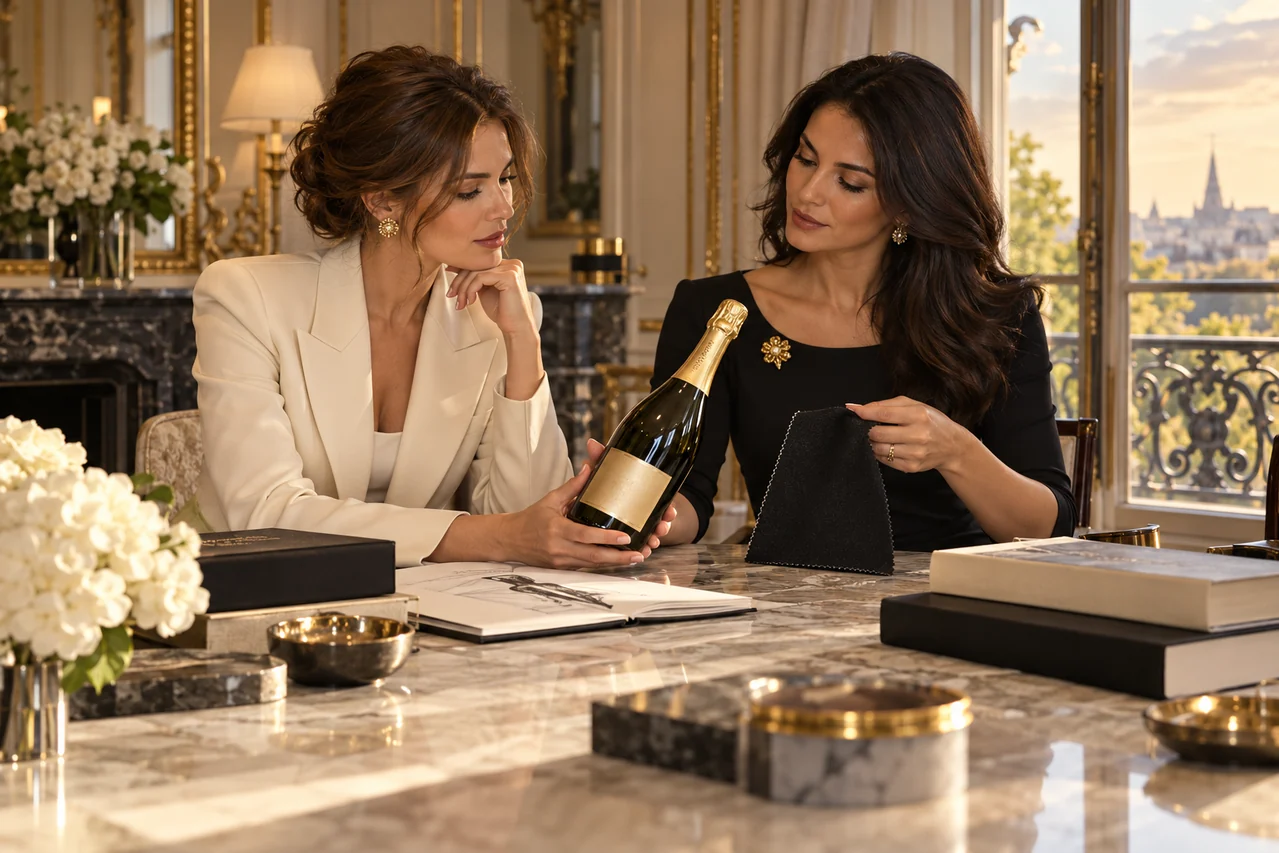
Two lives in different historical settings
Madame Clicquot took over the business after becoming a widow in 1805; Chanel's career belongs to a much later social and cultural world. The constraints each woman faced were not identical, and their opportunities arose from different circumstances. A comparison is useful when it asks how they acted within their own environments. It becomes misleading when it suggests a shared struggle with no attention to chronology, family position or the kinds of authority available to them.
Recover the person from the famous name
Many travelers recognize Chanel and Veuve Clicquot through objects before they think of Gabrielle or Barbe-Nicole. The names can seem almost independent of human lives. Cultural travel reverses that distance by asking who made choices behind the familiar identity. Madame Clicquot's biography and Gabrielle's early life introduce people rather than logos. Their enduring recognition is part of the story, but it should not make individual experience disappear beneath the later institution.
Clicquot links technique with commerce
Champagne is a demanding material product that must be produced, clarified, stored, transported and sold. The house's association with improvements in riddling shows how a practical production change can support quality and reputation. Madame Clicquot's story therefore connects innovation with markets and commercial judgment. It is not enough to admire an image of luxury. Understanding the wine's material demands reveals the work behind that image and provides a concrete basis for comparison with a very different industry.
Chanel connects clothing with changing lives
Chanel's importance includes her contribution to a new relationship between dress, movement and modern daily life. Materials and silhouettes were not merely visual signals; they concerned how clothing was worn. Her career belongs within wider changes in fashion and society rather than outside them as the invention of modern womanhood by a single individual. Considering use makes the comparison with Clicquot more precise: each story includes attention to a product's practical qualities as well as to its symbolic identity.
International audiences helped shape both reputations
French cultural prestige develops partly through recognition beyond France. Wine consumers abroad and international audiences for fashion helped the two names acquire significance outside their immediate production settings. That does not make the industries interchangeable. It does show why reputation is relational: a product becomes iconic through circulation, interpretation and use as well as through creation. International travelers can see themselves within that history rather than treat French luxury as a closed national tradition encountered from the outside.
Their complexity should remain visible
Neither successful enterprise nor aesthetic influence makes a person beyond criticism. Chanel's wartime conduct and political associations require serious treatment rather than silence beneath a flattering brand story. The controversies surrounding Chanel offer a separate, careful discussion. Madame Clicquot's achievements likewise should not be used to claim that economic barriers for women did not exist. A premium cultural experience earns credibility by preserving contradictions and context, not by selecting only the biographical material easiest to celebrate.
Create two contrasting encounters
A Veuve Clicquot Encounter enters history through a glass, production and commerce; The Chanel Mystery in Paris follows a fashion figure through a narrative rooted in the city. The Chanel experience ends at Place Vendôme, in front of the Vendôme Column. The difference in material and setting helps two chapters feel complementary rather than repetitive. Advisors can confirm practical arrangements independently, letting the shared theme of identity and enterprise connect the experiences without implying the same format or content.
Let the itinerary ask a substantial question
A day or several-day sequence can explore how a name becomes more famous than the person who bears it. Guests move from sensory experience to urban observation, considering skill, reputation and personal narrative along the way. That gives fashion and champagne a relationship beyond shopping and consumption. A well-paced program leaves time to discuss differences, including why two successful women should not automatically be given the same story. The theme becomes a framework for cultural inquiry rather than a collection of prestige labels.
FOR YOUR GUEST ITINERARIES
For guests interested in fashion, champagne or the women behind French cultural icons, our team can help connect the Chanel and Veuve Clicquot Encounters within one itinerary.
Discuss your itinerary