
Pause before the first sip
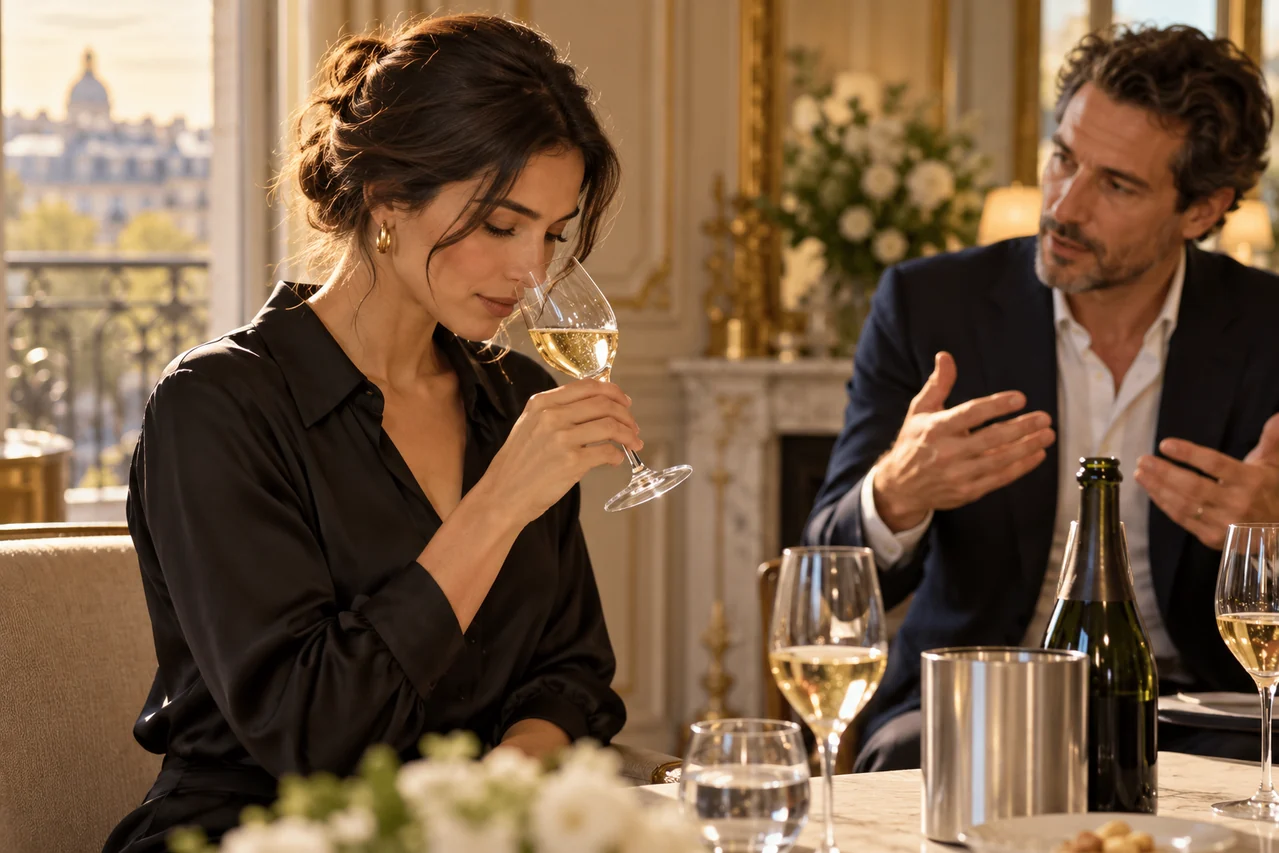
Looking at the wine creates a small but important change of pace. Color, clarity and the movement of bubbles invite observation before consumption. They are starting points for questions rather than enough evidence to issue a confident verdict on quality. A guest can notice what seems delicate, bright or lively and then see how the impression develops. This unhurried sequence is particularly valuable in travel, where a tasting can otherwise become a quick photograph followed by the next appointment.
Give clarity a history
Clear champagne appears so normal that travelers rarely consider it an achievement. Fermentation leaves deposits, and producers needed effective ways to gather and remove them. Riddling directs sediment toward the neck before disgorgement eliminates it. The production changes associated with Veuve Clicquot bring historical meaning to something visible in the glass. Technical explanation works best here when it remains tied to the observation, rather than becoming a detached lecture on every stage of wine production.
Describe aromas in your own language
A beginner may feel pressure to name a precise fruit or flower immediately. It is more useful to start with broad impressions and remain open to change. Different guests can associate the same smell with different memories or words without making the conversation meaningless. The purpose is to become more attentive, not to win an identification contest. A facilitator can introduce vocabulary gradually, giving participants ways to clarify what they perceive rather than replacing their responses with a supposedly perfect answer.
Notice structure as well as flavor
In the mouth, freshness, texture, intensity and length can be easier to discuss than an elaborate list of aromas. Asking whether the wine feels lively, rounded or persistent directs attention to its overall character. These observations also show why champagne should not be reduced to bubbles. Sensory understanding develops through several dimensions at once, and guests can return to an earlier impression after tasting. A thoughtful experience allows that revision instead of demanding an instant, authoritative judgment.
Use comparison to sharpen attention
Remembering one impression alongside another helps people recognize differences. Comparison can occur between guests' descriptions or between successive moments in the same glass; a specific selection of several wines should never be assumed unless confirmed. The principle is to notice what changes and why it interests you. For an experienced enthusiast, comparison may raise technical questions. For a newcomer, it may simply make freshness or texture easier to describe. Both are legitimate routes into a more reflective tasting.
Connect the wine with the person
Madame Clicquot's story adds questions about quality, commerce and problem-solving to the sensory process. Her house's international development makes the wine part of a history that extends beyond the region where it originated. A tasting organized around her life can therefore move between the glass and the decisions behind its reputation. The performed encounter supplies an interactive narrative frame, while the distinction between documented history and theatrical interpretation keeps the experience intellectually clear.
Allow expertise without intimidation
A mixed group may include serious collectors and guests who simply enjoy champagne. Designing the experience around several entry points prevents either audience from being excluded. Connoisseurs can ask about production or style; others can follow biography, trade or sensation. Nobody needs to arrive with the same knowledge. For advisors, this matters more than advertising an unusually technical session to everyone: the guest's interests should guide the surrounding itinerary and the level of discussion requested from the team.
Remember a question, not just a descriptor
A tasting can leave a stronger memory when it creates curiosity about a person or a process. Why did clarity matter to a nineteenth-century merchant? How did a regional wine gain international standing? Champagne's connection with French luxury offers a broader continuation after the sensory introduction. An itinerary that leaves room for conversation and a meal can let those questions develop naturally. Understanding does not require a comprehensive verdict on the wine; it begins with paying closer attention to something familiar.
FOR YOUR GUEST ITINERARIES
For guests who would enjoy a welcoming, culturally grounded tasting, ask Elyrea how the Veuve Clicquot Encounter can combine sensory discovery with historical context.
Discuss your itinerary